Announcing the some-thing Foundation's Inaugural STEAM Grant Recipients
We started some-thing Foundation with a simple belief: that the people doing the most meaningful work in STEAM are often the ones with the fewest resources to sustain it. The inaugural STEAM Grant Program was our first step toward changing that — five grants of $1,000 each, awarded to individuals whose projects embody the curiosity, creativity, and community that this foundation was built around.
This year, we received applications from artists, educators, students, engineers, and makers across the country. Every single one reminded us why this work matters. Selecting five was genuinely difficult.
To our recipients: We are honored to support you. To everyone who applied: thank you. You'll be hearing from us again.
Spring 2026
Meet our 2026 Inaugural STEAM Grant Recipients
Kacie Lees
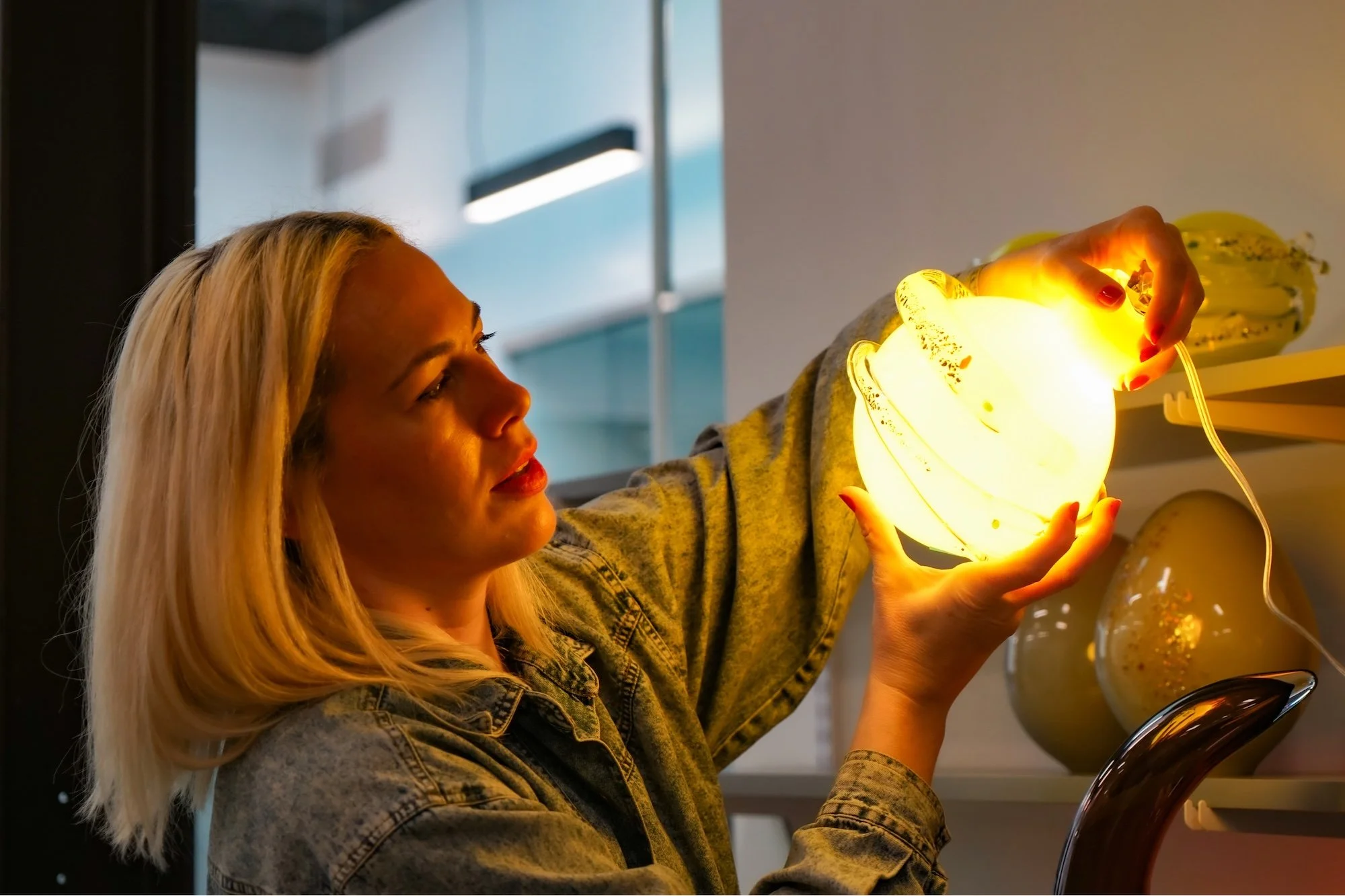
Project: Meditations on Matter
Kacie Lees is a Chicago-based artist and author who uses neon, metal, and print to explore nature and history through the phenomenon of light. Informed by research into optics and chaos theory, Lees fuses time into matter, using light as both subject and medium to reveal ideas of universal interconnection. She teaches neon fabrication nationally at institutions including New York University and the School of the Art Institute of Chicago, and strengthens the voice of glass craft through public workshops in Los Angeles, Pittsburgh, and Seattle. She is the author and illustrator of Neon Primer: A Handbook on Light Construction, a 200-page, hand-silk-screened technical manual that serves as a crucial resource to preserve material and fabrication history and expand the interdisciplinary reach of neon as a medium. In 2026, she serves as Artist-in-Residence at both the Studio of The Corning Museum of Glass and Spudnik Press Cooperative in Chicago, and is illustrating the Getty Research Institute's forthcoming open-source guide to neon conservation.
Meditations on Matter is a new body of interdisciplinary sculptural work bringing together blown-glass forms, welded metal armatures, and textile-based screen prints to explore the collective origins of life and matter. Inspired by the physics of the Big Bang, how atomic fusion gave rise to stars, planets, and everything in our ever-evolving universe. These light-based sculptures ask how art can illuminate our interconnectedness at both cosmic and material scales. The some-thing Foundation grant supports the fabrication of custom metal armatures to complete and mount this work into exhibition-ready sculptural environments.
Follow Kacie: @kacielees
Kate Mueller
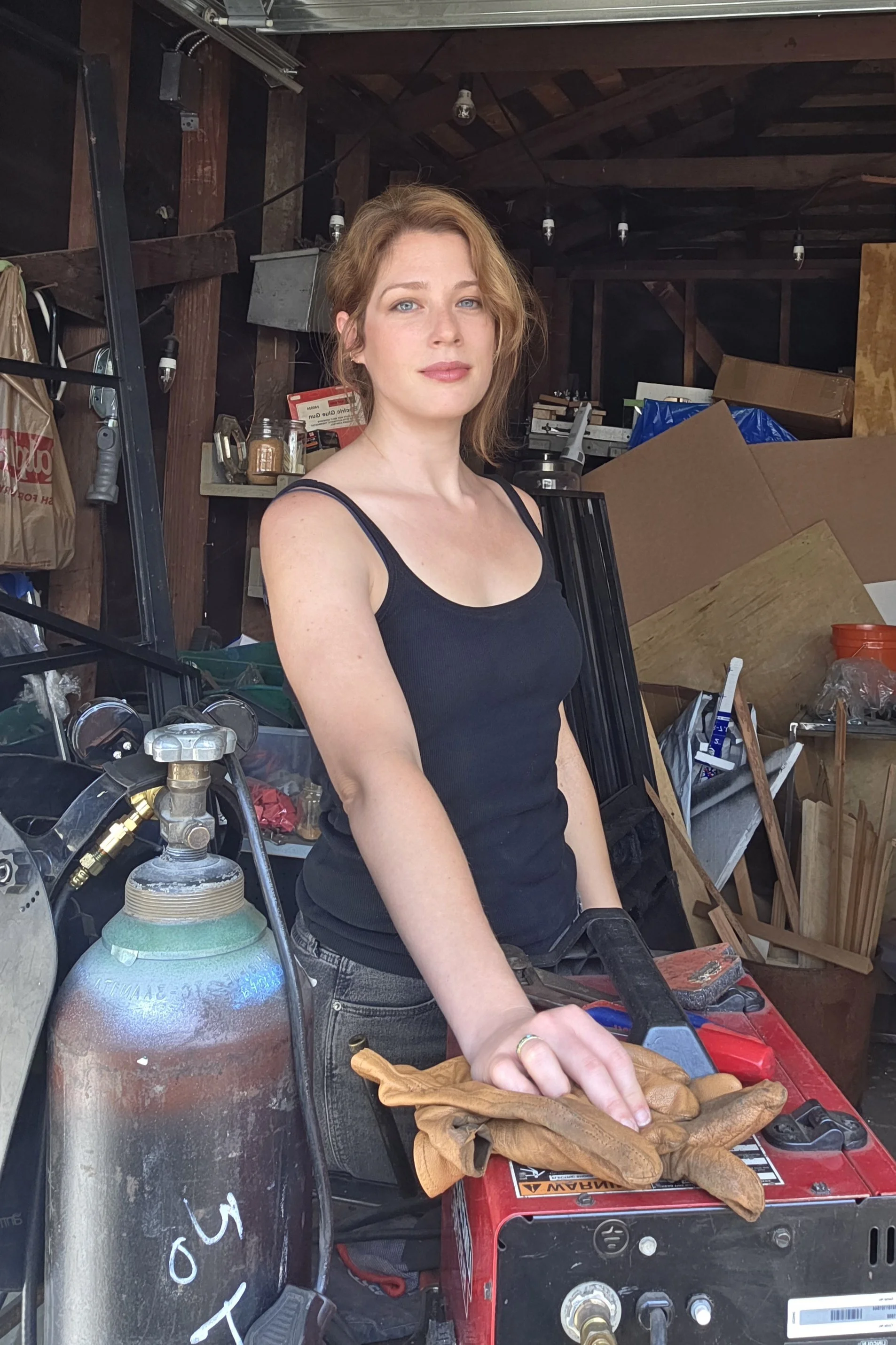
Project: String of Light That Connects All Things (S.O.L.T.C.A.T.)
Kate Mueller is an installation artist who merges welding and woodworking to construct large-scale works that evoke the sensation of stepping into another astral plane. Her immersive sculptures actively invite movement and interaction, making participation integral to the artwork's meaning. Working with the environment, her pieces draw awareness to the moment, the awe of nature, and the interconnectedness of all things. Raised in the coastal city of Oxnard, Mueller has since lived in a monastery in Romania, walked the nearly 500-mile Camino de Santiago de Compostela as a solo female traveler, and explored ancient temples on four continents. She moved to Los Angeles in 2014 to pursue her practice. She acquired her welding skills while working at a family-owned furniture shop, and when the company closed in 2019, the owner gave her the shop's welder. It's still the one she uses today.
String of Light That Connects All Things (S.O.L.T.C.A.T.) is an ongoing series of temporary, community-driven installations along the West Coast shoreline. Each month, Mueller plants constellation-inspired steel sculptures directly into the sand, without invasive equipment, working with the ocean tides from afternoon to dusk. The footprint of each piece references the constellation visible in that month's sky, honoring how early humans measured time and seasons by the stars. As the tides shift and the forms begin to disappear, the work reveals the fleeting nature of time and our urgent need for responsible stewardship of the environment. The some-thing Foundation grant supports fabrication materials for S.O.L.T.C.A.T.'s installation at Ormond Beach, California.
Tenly Dessalines
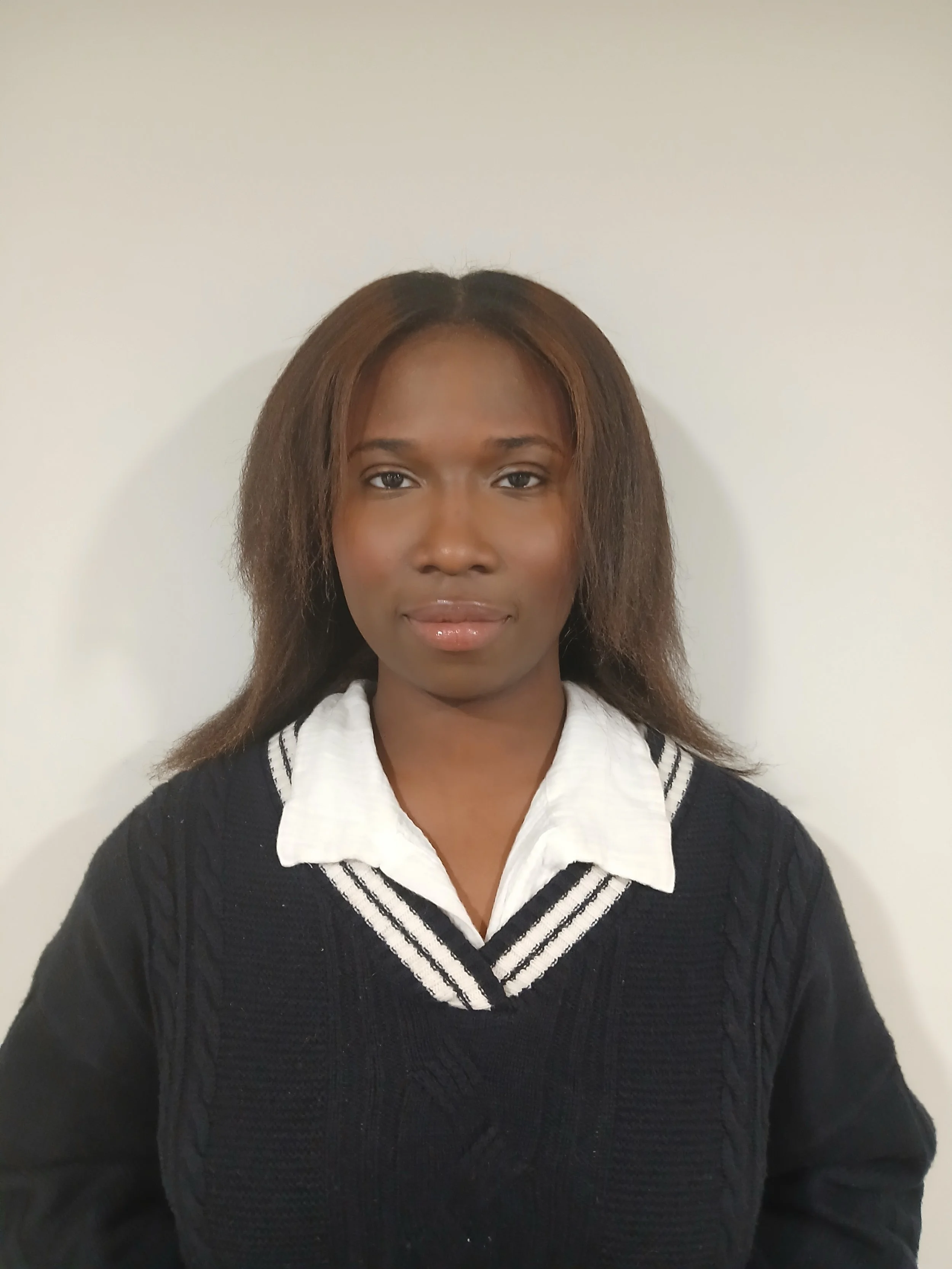
Tenly Dessalines is a first-generation college student at Southern Connecticut State University, majoring in International Business while actively building a second life in robotics engineering and applied artificial intelligence. She has participated in ThinkNeuro's Brain-Computer Interface (BCI) research initiative, developed an AI-powered multilingual translation application using React and Next.js, and is building a robotics and AI portfolio that spans software-hardware integration, automation workflows, and hands-on robotics builds. Her long-term goal is graduate study in robotics engineering and the development of intelligent systems that enhance human productivity and collaboration.
Digit-folio is a platform for students and early-career professionals, especially those on interdisciplinary or non-traditional paths, to track their projects, research contributions, technical skills, and professional milestones within a single, centralized, living system. Unlike static resumes or siloed portfolios, Digit-folio is designed for longitudinal tracking, bridging education, research, and professional development into a single adaptive tool accessible to anyone charting their own course. The some-thing Foundation grant supports platform development, cloud hosting, UI/UX testing, and a public launch by July 2026.
Digit-folio: Track Your Growth, Own Your Path
Jennifer Nolan Johnson
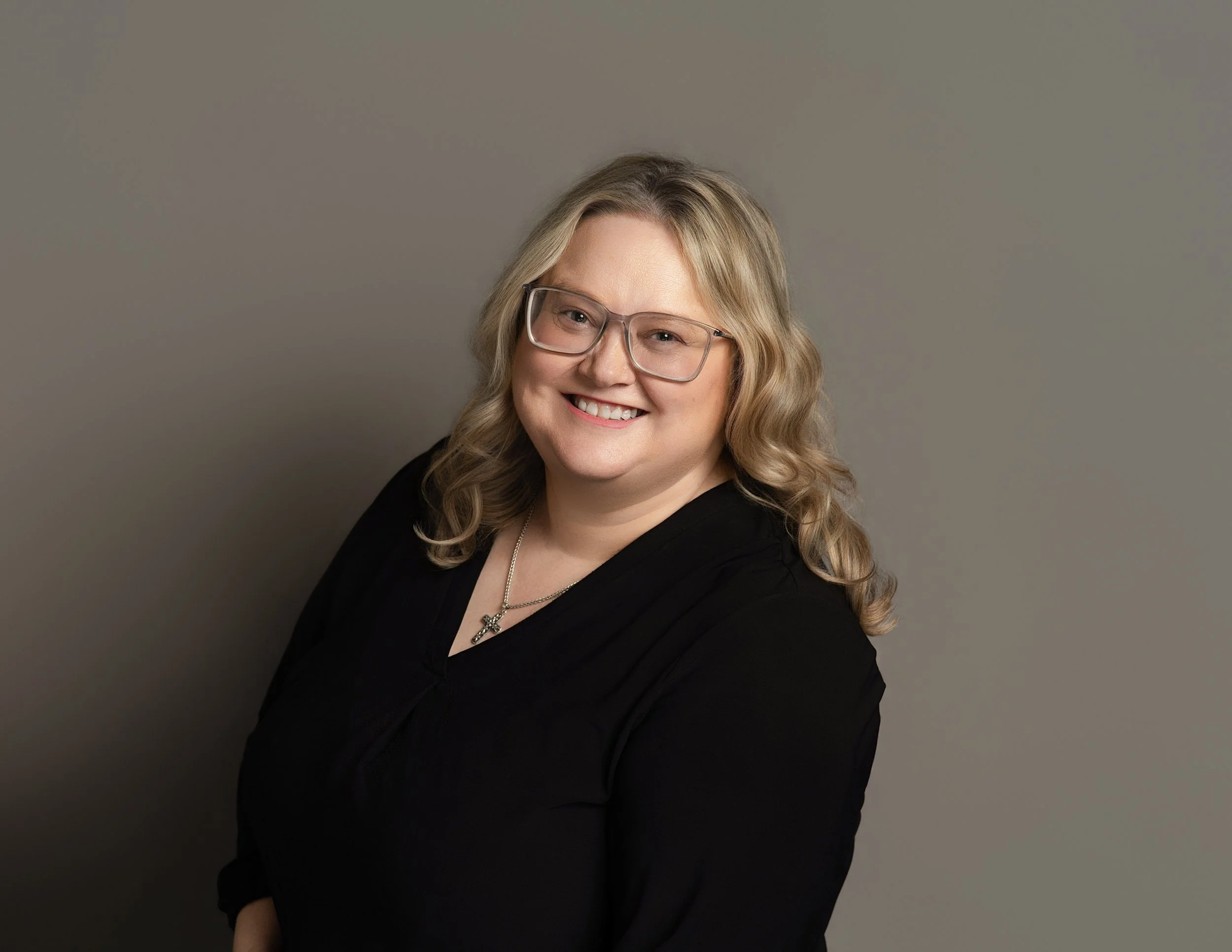
Project: Opening Cybersecurity Pathways for Women and Neurodivergent Students Through Certification and Community Mentorship
Jennifer Nolan Johnson is a National Board Certified educator with over 27 years of experience in K–12 education, curriculum development, and community-based learning. She is focused on expanding access to cybersecurity education by creating inclusive pathways for women, students, and neurodivergent individuals. She designs community workshops and mentorship opportunities that help participants explore and enter cybersecurity careers, and is a featured speaker at the Virginia Department of Education VITAL Conference, where she presents on inclusive and practical uses of technology in education. She is also an active member of Women in Cybersecurity (WiCyS).
Jennifer's project is a model of what it looks like to learn something in order to give it away. With support from the some-thing Foundation, she earned her CompTIA Security+ certification and attended the Women in Cybersecurity Conference in Washington, DC, bringing that knowledge directly back to her community. She now hosts free, accessible workshops that introduce cybersecurity concepts in clear, approachable language and mentors women and neurodivergent students through their first steps in the field, connecting them to national networks and local women in tech. Her work creates a practical, replicable model for expanding access to cybersecurity education at the community level
Dorcas Osangiri
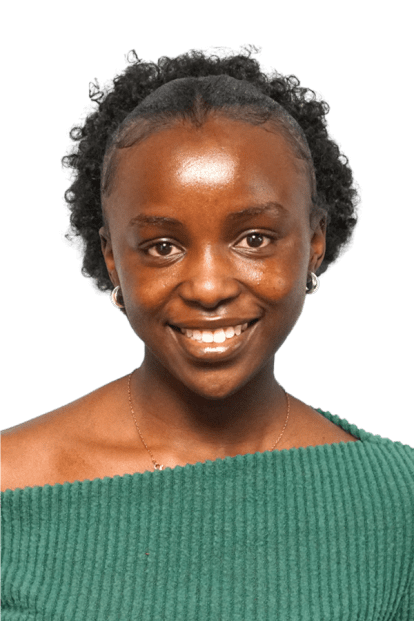
Project: AI-Powered Carbon Footprint Tracker for Students and Small Communities
Dorcas Osangiri is an Electrical and Computer Engineering student and math tutor passionate about designing sustainable, technology-driven solutions. Her work focuses on improving access, efficiency, and environmental impact through engineering. Originally from Kenya and currently studying at Olympic College in Bremerton, Washington, she is committed to using her skills to address real-world challenges, particularly in underserved communities. Beyond academics, she mentors younger students and supports initiatives that encourage girls and underrepresented students to pursue STEM.
Dorcas first built the concept for her AI-Powered Carbon Footprint Tracker during an engineering hackathon. The tool analyzes user inputs — energy usage, transportation habits, daily activities — and uses AI to estimate carbon emissions and deliver actionable, personalized recommendations for reduction. The some-thing Foundation grant is helping her expand the project beyond its prototype stage into a scalable tool for students and small communities who want to understand and actively reduce their environmental impact.
A Note from the Foundation
These five grantees represent the full spectrum of what we believe STEAM can be: rigorous and poetic, technical and human, individual and communally oriented. They are artists making work about light, matter, and what it means to be alive on this planet. They are educators turning their own learning into someone else's opportunity. They are students and makers building tools for the communities they came from.
some-thing Foundation was founded on the belief that creative and technical minds, especially those navigating systems that weren't built for them, deserve more than encouragement. They deserve resources. We are proud to put $1,000 each behind these five remarkable people, and we can't wait to see what they build.